
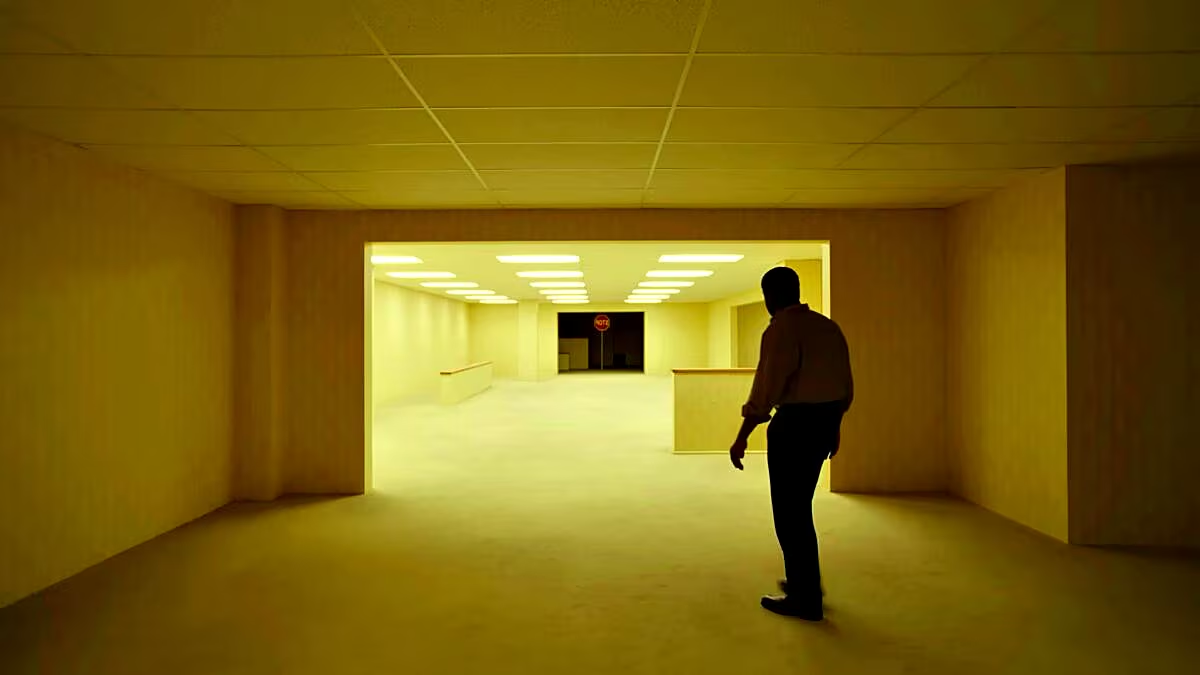
The term liminal space has become increasingly popular in recent years, especially across social media, psychology discussions, art communities, and internet culture. While the phrase may seem modern, its roots stretch back decades and are deeply connected to human psychology, anthropology, and our perception of change. At its core, a liminal space represents a transitional stage—a point between one state and another where certainty disappears and transformation begins.
The word “liminal” originates from the Latin word limen, meaning “threshold.” A threshold is a doorway, a border, or a point of crossing. In a symbolic sense, liminal spaces exist whenever people move from one phase of life to another. They can be physical locations, emotional experiences, social transitions, or psychological states. The concept reflects the feeling of being suspended between the familiar past and an uncertain future.
Most people have experienced liminal spaces without realizing it. Waiting in an empty airport at midnight, walking through a deserted school hallway during summer vacation, or standing alone in a hotel corridor can create a strange emotional response. These environments feel familiar yet somehow disconnected from reality. They often evoke nostalgia, curiosity, discomfort, or even a sense of mystery.
What makes liminal spaces so fascinating is their ability to challenge our expectations. Human beings naturally seek patterns, certainty, and structure. When we encounter places or situations that exist between clear definitions, our minds become highly attentive. This heightened awareness is one reason liminal spaces have captured the imagination of artists, photographers, writers, and internet communities worldwide.
The Origins of the Liminal Space Concept
The modern understanding of liminal space can be traced back to anthropology. In the early twentieth century, anthropologist Arnold van Gennep introduced the concept while studying rites of passage. He observed that many cultural ceremonies followed a similar pattern: separation from an old status, transition through an in-between stage, and incorporation into a new status.
Van Gennep referred to this middle phase as the liminal stage. During this period, individuals no longer belonged entirely to their previous role, yet they had not fully entered their new one. Examples include adolescence between childhood and adulthood, engagement between dating and marriage, or graduation between student life and professional life.
Later, anthropologist Victor Turner expanded upon these ideas. Turner viewed liminality as a powerful social and psychological condition where traditional structures temporarily dissolve. In liminal states, people often experience uncertainty, reflection, and transformation. The normal rules of society may become less rigid, creating opportunities for growth and change.
Although these theories originally focused on rituals and cultural transitions, modern thinkers recognized that liminality exists far beyond ceremonial contexts. Today, the concept is applied to architecture, psychology, literature, philosophy, and even digital culture. The broad applicability of liminal space explains why the idea continues to resonate with people across different disciplines.
Characteristics of a Liminal Space
One defining feature of a liminal space is ambiguity. Unlike places with clear purposes and identities, liminal spaces seem suspended between functions. They often appear incomplete, abandoned, empty, or temporarily inactive. This ambiguity creates a sense of uncertainty that can feel both unsettling and intriguing.
Another characteristic is transition. Liminal spaces are frequently associated with movement rather than permanence. Hallways connect rooms, airports connect destinations, and staircases connect floors. These locations are not usually places where people stay for long periods. Instead, they serve as pathways from one point to another.
Time also plays an important role. Many liminal spaces feel disconnected from ordinary schedules. An empty shopping mall after closing hours or a school building during vacation creates the impression that time has paused. The absence of normal activity transforms familiar environments into something strangely unfamiliar.
Finally, liminal spaces often trigger emotional complexity. People may simultaneously experience nostalgia, loneliness, wonder, excitement, and anxiety. This mixture of emotions occurs because liminal environments remind us of transition itself—a universal human experience that is both hopeful and uncertain.
Physical Examples of Liminal Spaces
Physical liminal spaces are perhaps the most recognizable examples. These locations exist primarily as transitional environments rather than destinations. Because they are designed for movement, they often feel unusual when encountered in moments of stillness.
Airports are among the most common examples. Travelers arriving at an airport have left one location but have not yet reached another. The airport itself represents a temporary state between departures and arrivals. Long waits, unfamiliar surroundings, and the anticipation of change contribute to its liminal quality.
Hallways and corridors provide another classic example. People rarely think of hallways as meaningful places because they exist solely to connect other rooms. However, when empty and silent, hallways can feel strangely surreal. Their transitional purpose becomes more noticeable when the usual flow of activity disappears.
Hotels, train stations, parking garages, waiting rooms, and empty shopping centers also embody liminality. These places are designed for temporary use rather than long-term occupation. When stripped of crowds and activity, they reveal an eerie beauty that captures the essence of being “between” destinations.
The Psychology Behind Liminal Spaces
Psychologists are particularly interested in liminal spaces because of the unique emotional responses they provoke. Human beings depend on familiarity to navigate daily life. When familiar environments suddenly appear unfamiliar, the brain becomes more alert and reflective.
One explanation involves cognitive expectations. We associate certain locations with specific activities. A school is expected to contain students. A mall is expected to contain shoppers. When these expected elements are absent, our minds recognize a discrepancy. This mismatch creates a feeling that something is unusual, even if nothing is objectively wrong.
Another factor is nostalgia. Many liminal spaces remind people of earlier stages of life. An empty playground may evoke childhood memories. A vacant classroom may bring back experiences from school years. These emotional associations contribute to the powerful impact of liminal imagery.
The uncertainty present in liminal spaces can also encourage introspection. Without the distractions of ordinary routines, individuals may become more aware of their thoughts and emotions. This reflective quality explains why liminality is often linked to personal growth, creativity, and self-discovery.
Liminal Spaces in Everyday Life
While people often think of liminal spaces as physical locations, liminality exists throughout daily life. Many common experiences involve transitions between identities, roles, or stages of development. These moments can be just as significant as physical environments.
Graduating from school is a classic example. After completing education, individuals may feel uncertain about their future. They are no longer students, yet they may not fully identify with their next role. This period of uncertainty represents a liminal stage filled with possibilities and challenges.
Changing careers can produce similar feelings. Leaving one profession behind while preparing for another often creates emotional ambiguity. People may question their identity, goals, and direction. Although uncomfortable, this uncertainty frequently leads to personal development and renewed purpose.
Relationships also involve liminality. Engagements, separations, marriages, and major life transitions place individuals between different emotional realities. These experiences remind us that life is not a series of fixed states but a continuous process of transformation.
The Rise of Liminal Space in Internet Culture
The internet has played a major role in popularizing liminal spaces. Online communities began sharing photographs of empty buildings, deserted corridors, and unusual transitional environments. These images quickly attracted attention because they evoked strong emotional reactions.
Many liminal space photographs feature fluorescent lighting, outdated architecture, and vacant public areas. The absence of people creates an atmosphere that feels both familiar and strange. Viewers often describe these images as dreamlike, nostalgic, or unsettling.
Social media platforms accelerated the spread of liminal aesthetics. Entire communities emerged dedicated to collecting and discussing liminal photographs. Users shared personal interpretations, emotional reactions, and memories connected to specific images. This collective engagement transformed liminal spaces into a major online phenomenon.
The popularity of liminal content reflects a broader cultural fascination with uncertainty and change. In a rapidly evolving world, images of transitional environments resonate with people navigating their own personal and societal transformations.
Liminal Spaces in Art, Literature, and Film
Artists have long explored liminality because it offers rich opportunities for symbolism and emotional depth. Transitional spaces can represent growth, uncertainty, identity, and transformation. As a result, liminal themes appear across many creative mediums.
In literature, characters often undergo liminal journeys before achieving significant development. The period between leaving home and reaching a destination frequently serves as a metaphor for personal growth. These narratives emphasize the importance of transformation rather than merely focusing on the starting or ending point.
Filmmakers frequently use liminal environments to create atmosphere. Empty roads, deserted buildings, and isolated landscapes can evoke tension, mystery, or contemplation. These settings encourage audiences to focus on emotional and psychological experiences rather than physical action.
Visual artists are similarly drawn to liminal imagery. Through photography, painting, and digital art, creators capture the strange beauty of spaces that exist between activity and emptiness. Their work highlights the emotional complexity hidden within ordinary environments.
Why Liminal Spaces Feel Unsettling
Many people describe liminal spaces as eerie or unsettling, even when there is no obvious danger. This reaction stems from the way human perception interprets uncertainty. Our brains are constantly trying to predict and understand the world around us.
When a familiar environment lacks expected activity, prediction becomes more difficult. An empty office building at night feels different from the same office during business hours because our expectations have been disrupted. The absence of normal social cues creates subtle psychological tension.
Liminal spaces also challenge our understanding of permanence. They remind us that everything changes over time. Buildings become abandoned, childhood ends, careers evolve, and relationships transform. These reminders can trigger feelings of vulnerability and existential reflection.
However, discomfort is only one possible response. Many people find liminal spaces peaceful, inspiring, or even comforting. The same uncertainty that creates anxiety can also create freedom. Without rigid expectations, individuals may feel more open to imagination and self-exploration.
The Positive Side of Liminality
Although liminal experiences can be uncomfortable, they often provide valuable opportunities for growth. Transformation rarely occurs within complete certainty. Personal development frequently emerges during periods of transition when old assumptions are challenged.
Liminal stages encourage reflection. When familiar routines disappear, people gain opportunities to evaluate their goals, beliefs, and priorities. This self-examination can lead to greater clarity and personal insight.
Creativity also thrives in liminal conditions. Artists, writers, entrepreneurs, and innovators often generate their best ideas during moments of uncertainty. The absence of fixed structures allows new possibilities to emerge.
Most importantly, liminality reminds us that change is a natural part of life. Rather than viewing uncertainty as a problem, individuals can learn to see it as a space of potential. Growth, learning, and transformation often begin where certainty ends.
Conclusion
Liminal space is far more than an internet trend or architectural curiosity. It represents a profound concept that touches nearly every aspect of human experience. Whether found in empty hallways, major life transitions, artistic expression, or psychological development, liminal spaces reveal the power of existing between states of being.
These environments and experiences challenge our expectations, evoke powerful emotions, and encourage reflection. They remind us that life is not defined solely by beginnings or endings but also by the transformative moments in between. While liminality may sometimes feel uncomfortable, it is often within these uncertain spaces that growth and discovery occur.
As society continues to change and evolve, the fascination with liminal spaces is unlikely to disappear. Their mysterious blend of familiarity and uncertainty speaks to something universal within the human condition. By understanding liminality, we gain a deeper appreciation for transition, transformation, and the remarkable journey of becoming something new.