
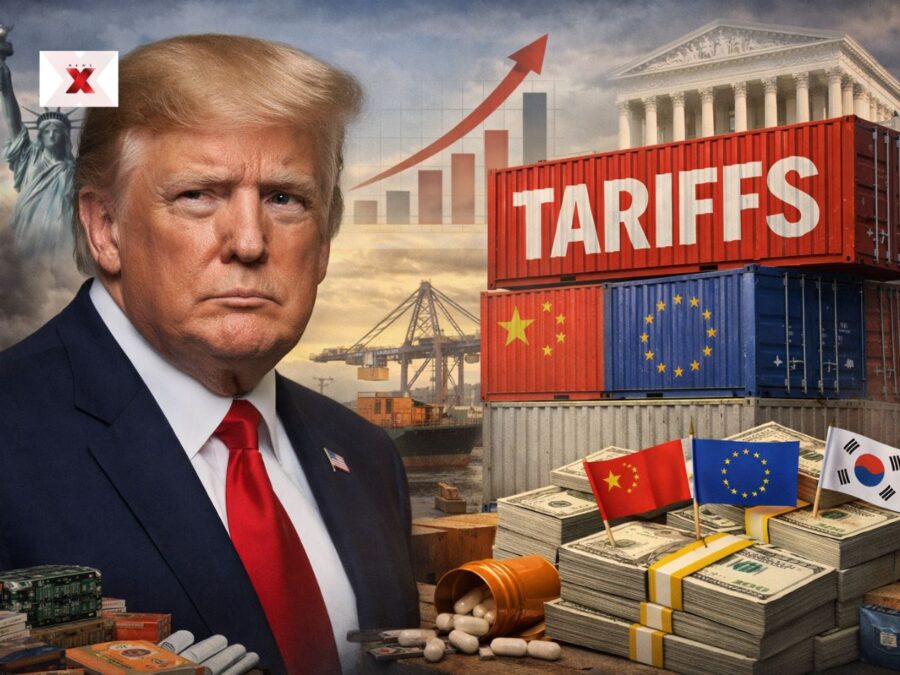
The term “Trump tariffs” refers to a series of trade policies introduced during the presidency of Donald Trump. These tariffs were designed to protect domestic industries, reduce trade deficits, and renegotiate what the administration viewed as unfair global trade agreements. While tariffs have always been a tool in international economics, the scale and intensity of these measures marked a significant shift in modern U.S. trade policy.
At their core, tariffs are taxes imposed on imported goods. The idea is simple: by making foreign products more expensive, domestic industries gain a competitive advantage. However, the execution of Trump tariffs was anything but simple. The policy sparked debates across political, economic, and academic circles, with supporters praising its boldness and critics warning of long-term consequences.
One of the most notable aspects of Trump tariffs was their focus on major trading partners, especially China. The administration argued that China engaged in unfair trade practices, including intellectual property theft and state subsidies. As a result, tariffs became a central tool in addressing these concerns and reshaping the trade relationship between the two economic giants.
Understanding Trump tariffs requires more than just a surface-level explanation. It involves examining the motivations behind the policy, its implementation, and the ripple effects it created across the global economy. This article explores all these dimensions in detail, offering a comprehensive look at one of the most controversial economic strategies of the 21st century.
The Economic Philosophy Behind Trump Tariffs
The economic thinking behind Trump tariffs was rooted in a form of economic nationalism. The administration prioritized domestic production, job creation, and reducing reliance on foreign imports. This approach contrasted sharply with decades of globalization policies that emphasized free trade and international cooperation.
Supporters of the tariffs believed that globalization had harmed American workers, particularly in manufacturing sectors. Factories had moved overseas, wages had stagnated, and entire communities had been economically disrupted. By imposing tariffs, the administration aimed to reverse these trends and bring jobs back to the United States.
Another key element of this philosophy was the focus on trade deficits. The U.S. had long imported more than it exported, leading to a significant trade imbalance. Trump argued that this imbalance was a sign of unfair trade practices and that tariffs could help correct it. While economists often debate the importance of trade deficits, they became a central talking point in the administration’s policy.
Critics, however, pointed out that tariffs can act as a tax on consumers. When import costs rise, businesses often pass those costs on to customers. This means that while tariffs may protect certain industries, they can also lead to higher prices for everyday goods. The debate between protectionism and free trade is not new, but Trump tariffs brought it back into the spotlight in a dramatic way.
Key Tariff Policies and Implementation
The Trump administration implemented several major tariff policies, each targeting specific industries and countries. One of the earliest actions was the imposition of tariffs on steel and aluminum imports. These tariffs were justified on national security grounds, with the administration arguing that a strong domestic metals industry was essential for defense.
Another major initiative was the Section 301 tariffs against China. These tariffs targeted hundreds of billions of dollars’ worth of Chinese goods, ranging from electronics to clothing. The goal was to pressure China into changing its trade practices and negotiating a more favorable agreement with the United States.
The administration also used tariffs as a negotiating tool in trade agreements. For example, tariffs were leveraged during the renegotiation of NAFTA, which eventually became the United States-Mexico-Canada Agreement (USMCA). This demonstrated how tariffs were not just an economic tool but also a strategic instrument in diplomacy.
Implementation was not without challenges. Businesses had to adapt quickly to changing trade rules, supply chains were disrupted, and uncertainty became a constant factor. While some industries benefited from protection, others struggled with increased costs and reduced access to global markets.
Impact on U.S. Industries
Trump tariffs had a mixed impact on U.S. industries. For sectors like steel and aluminum, the tariffs provided immediate relief from foreign competition. Domestic producers saw increased demand and, in some cases, higher profits. This was exactly the outcome the administration had hoped for.
However, the benefits were not evenly distributed. Industries that relied on imported materials faced higher costs. For example, manufacturers that used steel as an input saw their expenses rise, which affected their competitiveness both domestically and internationally. This created a complex situation where one sector’s gain became another’s challenge.
Agriculture was particularly affected by retaliatory tariffs from other countries. Farmers who relied on exports found themselves facing reduced demand and lower prices. The government introduced subsidies to offset these losses, but the situation highlighted the interconnected nature of global trade.
Small businesses also felt the impact. Unlike large corporations, they often lacked the resources to absorb increased costs or shift supply chains. This made it harder for them to compete, especially in industries with tight margins. The overall effect was a patchwork of winners and losers across the economy.
Global Trade Tensions and Trade Wars
One of the most significant consequences of Trump tariffs was the escalation of global trade tensions. When the U.S. imposed tariffs, affected countries responded with their own measures. This led to a series of retaliatory actions, commonly referred to as a trade war.
The U.S.-China trade war was the most prominent example. Both countries imposed tariffs on each other’s goods, affecting hundreds of billions of dollars in trade. This created uncertainty in global markets and disrupted supply chains that had been built over decades.
Other countries were also involved. The European Union, Canada, and Mexico all responded to U.S. tariffs with their own countermeasures. This broadened the scope of the conflict and highlighted the risks of unilateral trade actions in a highly interconnected world.
Trade wars can have far-reaching consequences. They can slow economic growth, reduce investment, and create volatility in financial markets. While tariffs are intended to protect domestic industries, their broader impact often extends far beyond national borders.
Effects on Consumers and Prices
For consumers, the impact of Trump tariffs was often felt through higher prices. When import costs increase, businesses typically pass those costs on to customers. This means that everyday items, from electronics to clothing, became more expensive.
Inflationary pressures were a concern during this period. While the overall impact on inflation was moderate, certain categories of goods saw noticeable price increases. This was particularly evident in products heavily reliant on imports from China.
At the same time, the effect was not uniform. Some companies chose to absorb the costs rather than raise prices, at least temporarily. Others shifted their supply chains to avoid tariffs, sourcing goods from different countries. These adjustments helped mitigate some of the impact on consumers.
The debate over consumer impact remains a key part of the discussion حول Trump tariffs. Supporters argue that short-term price increases are a necessary cost for long-term economic benefits, while critics see them as an unnecessary burden on households.
Political and Strategic Implications
Trump tariffs were not just an economic policy; they were also a political statement. They reflected a broader shift نحو nationalism and a willingness to challenge established international norms. This approach resonated with certain segments of the population who felt left behind by globalization.
The tariffs also influenced international relations. Allies and adversaries alike had to respond to the new trade environment. This sometimes led to tensions, even with countries that had traditionally been close partners of the United States.
From a strategic perspective, tariffs were used as leverage in negotiations. By imposing economic pressure, the administration aimed to achieve broader policy goals. This approach was evident in negotiations with China and in the restructuring of trade agreements.
However, the use of tariffs as a political tool also raised questions about predictability and stability. Businesses and governments rely on consistent policies to plan for the future. Frequent changes and uncertainty can make this more difficult, affecting investment and economic growth.
Role of International Organizations
International organizations like the World Trade Organization played a significant role in the context of Trump tariffs. The WTO provides a framework for resolving trade disputes and promoting fair trade practices.
During the Trump administration, there was tension between the U.S. and the WTO. The administration criticized the organization for being ineffective and biased. This led to a more unilateral approach to trade policy, with tariffs being imposed without always going through traditional dispute resolution mechanisms.
Other countries often turned to the WTO to challenge U.S. tariffs. These disputes highlighted the complexities of international trade law and the challenges of enforcing global rules. While the WTO provides a platform for resolution, its processes can be slow and politically sensitive.
The situation raised broader questions about the future of global trade governance. As countries increasingly use tariffs and other measures, the role of organizations like the WTO becomes even more critical, yet also more contested.
Long-Term Economic Consequences
The long-term effects of Trump tariffs are still being debated. Some argue that they helped revive certain industries and brought attention to unfair trade practices. Others believe they disrupted global trade and created unnecessary economic uncertainty.
One potential long-term impact is the restructuring of supply chains. Companies have started diversifying their sources of production to reduce reliance on any single country. This could lead to a more resilient but also more complex global trade system.
Another consideration is the precedent set by these policies. Future administrations may adopt similar approaches, either continuing or modifying the use of tariffs. This could lead to a more protectionist global environment.
Economic outcomes often take years to fully materialize. While some effects are immediate, others unfold over time. The legacy of Trump tariffs will likely be studied for decades as economists and policymakers assess their true impact.
Conclusion: Understanding the Legacy of Trump Tariffs
Trump tariffs represent a significant chapter in modern economic history. They challenged long-standing assumptions about free trade and introduced a more assertive approach to economic policy. Whether viewed as a necessary correction or a risky experiment, their impact cannot be ignored.
The policy reshaped relationships between major economies, particularly between the United States and China. It also highlighted the complexities of global trade, where actions in one country can have far-reaching consequences.
For individuals and businesses, the tariffs served as a reminder of how interconnected the global economy has become. Decisions made at the highest levels of government can influence prices, jobs, and opportunities around the world.
Ultimately, understanding Trump tariffs requires a balanced perspective. They brought both benefits and challenges, and their legacy continues to evolve. As the global economy moves forward, the lessons learned from this period will play a crucial role in shaping future trade policies.